Europe

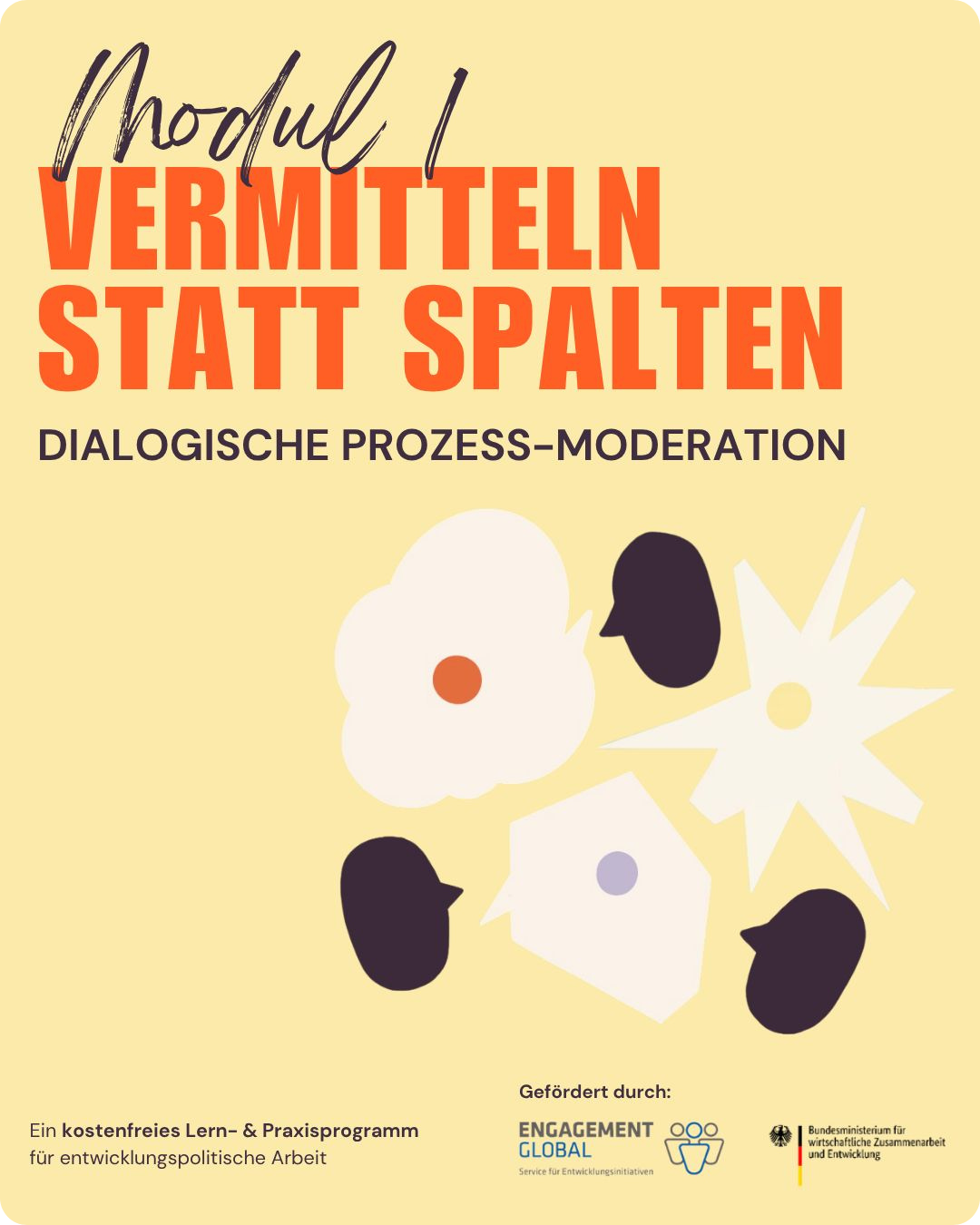
Germany - Bringing People Together rather than Dividing Them

Dialogic Process Facilitation for NGOs

Region Europe
Start 2026
Sector Civil Society
CLI Project Manager Theresa Kuschka, Katrin Schulz, Martin Fielko

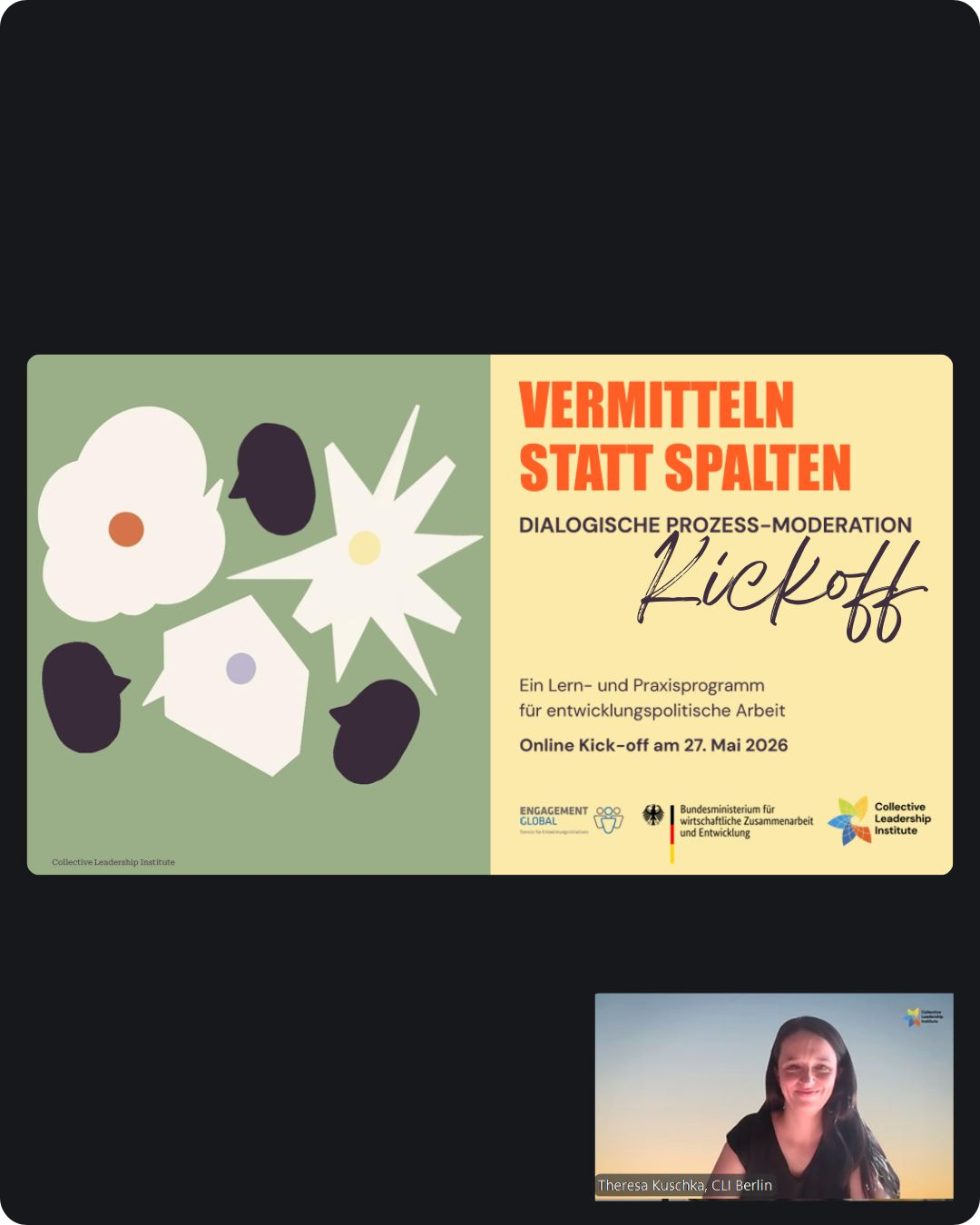
Civil society is facing serious challenges: activists and initiatives are more and more under pressure to justify their work. This ranges from budget cuts and comments such as “we don’t need you anymore” up to – in the worst case – physical attacks. CLI’s new online training programme “Bringing People Together rather than Dividing Them” (in German: Vermitteln statt Spalten) offers German NGOs and initiatives methodologies for dialogic process facilitation. CLI supports depolarization efforts through the programme.

How does it come to polarization and what are key skills and methods for depolarization efforts?

Polarization is a worldwide phenomenon that is not exclusive to Germany or Europe. In many conversations and concrete actions that we see today, it is a challenge that there is not enough time taken to get everybody heard. In polarized conversations, it takes courage to insist on all voices being heard. A key skill to have this courage is dialogic process facilitation.

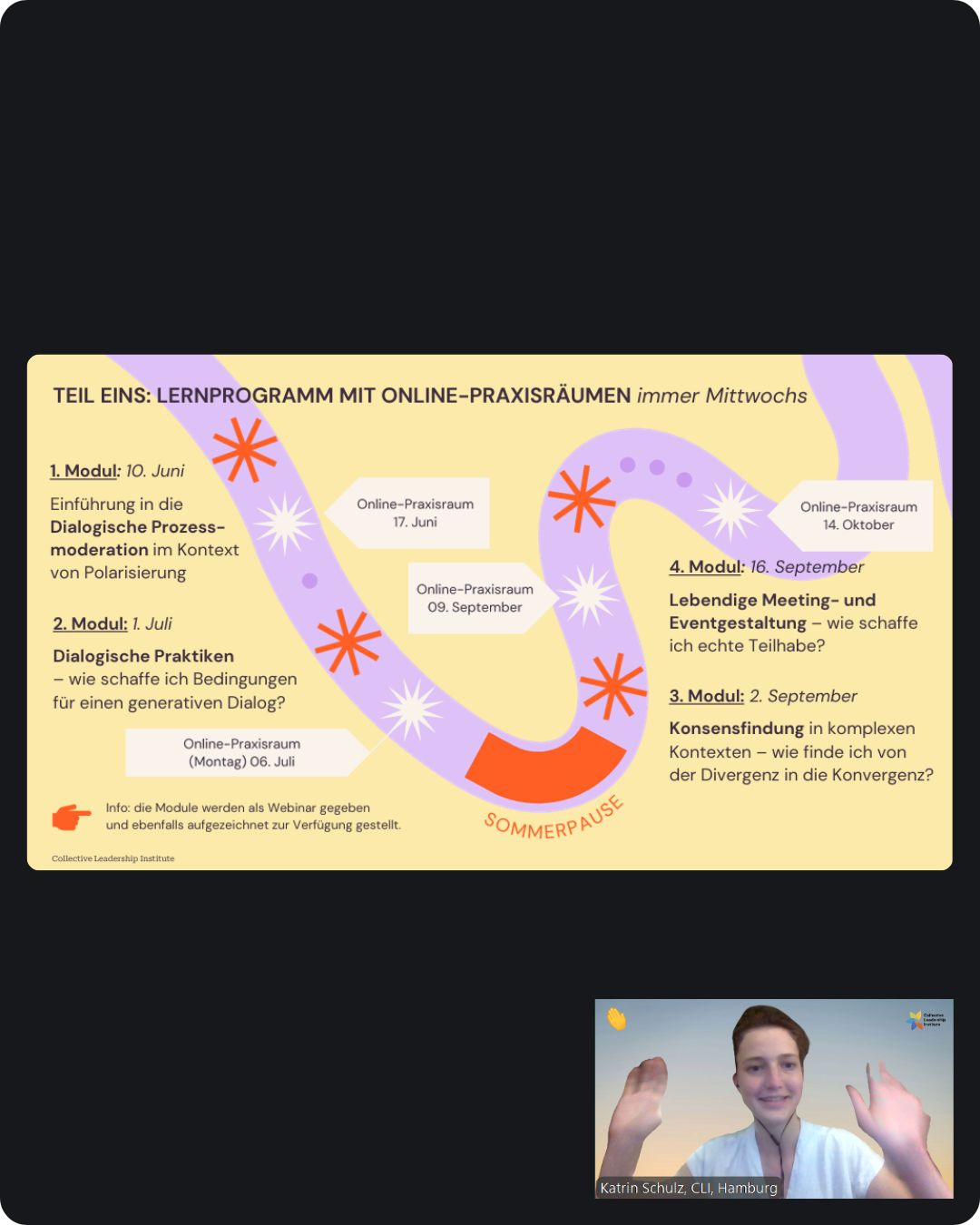
The programme offers four online training modules on the topic, as well as online exchange spaces in between where participants can reflect on their practices and exchange tips and to-dos. In a second project step next year, participants get coaching and check-ups, and three local live events will be selected where participants co-facilitate demanding situations together with CLI facilitators.
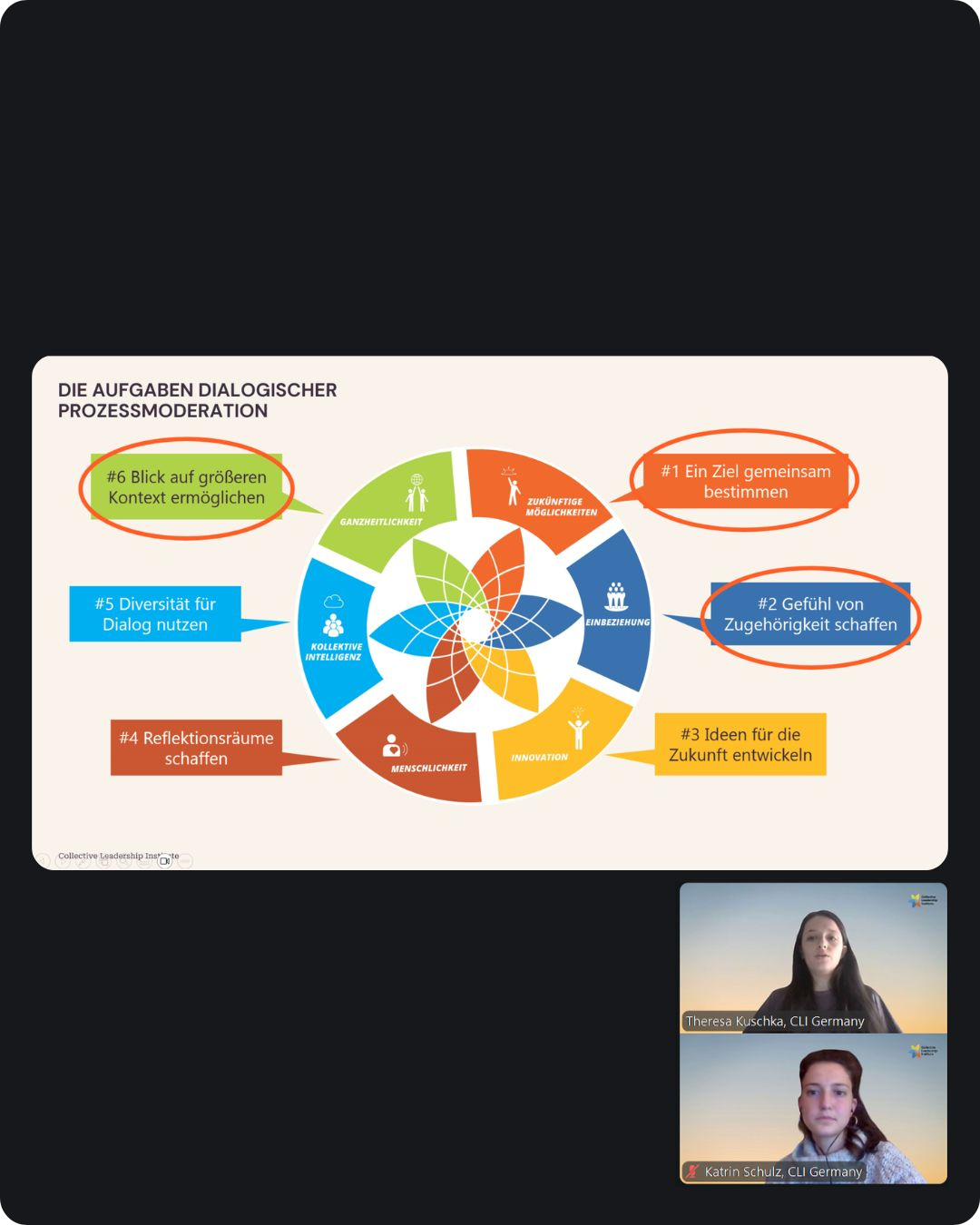
In the first two modules, participants learned about four action modes that are useful for dialogic process facilitation. Move, follow, oppose, and bystand are significant actions to consider for dialogic process facilitators. They also help to balance inquiry and advocacy. One of the main questions raised was how we move from conversations that are focused on personal gain to generative dialogues for mutual understanding. This can be achieved by using collective intelligence.

From September 2026 onwards, we will continue this journey with training modules on finding consensus and enlivening meetings & events. CLI’s Dialogic Change Model and Collective Leadership Compass are the guiding methodologies throughout the capacity building and training phase of the programme.

Voices from stakeholders

“This is exactly what I was looking for!” Programme participant during the kick-off session.

“Do I try to understand? AND do I try to be understood? need to be equally important,” Participant’s reflection in the second training module.

Project Facts
Project time

2026-2027

Stakeholders

20 German civil society representatives in polarized contexts

Outcome

Participants learned tools for depolarizing conversations and entering into generative dialogues.

Tbd: they practice dialogic process facilitation in real situations and events, and support societal depolarization efforts.

Learn more about CLI’s projects
Achieve