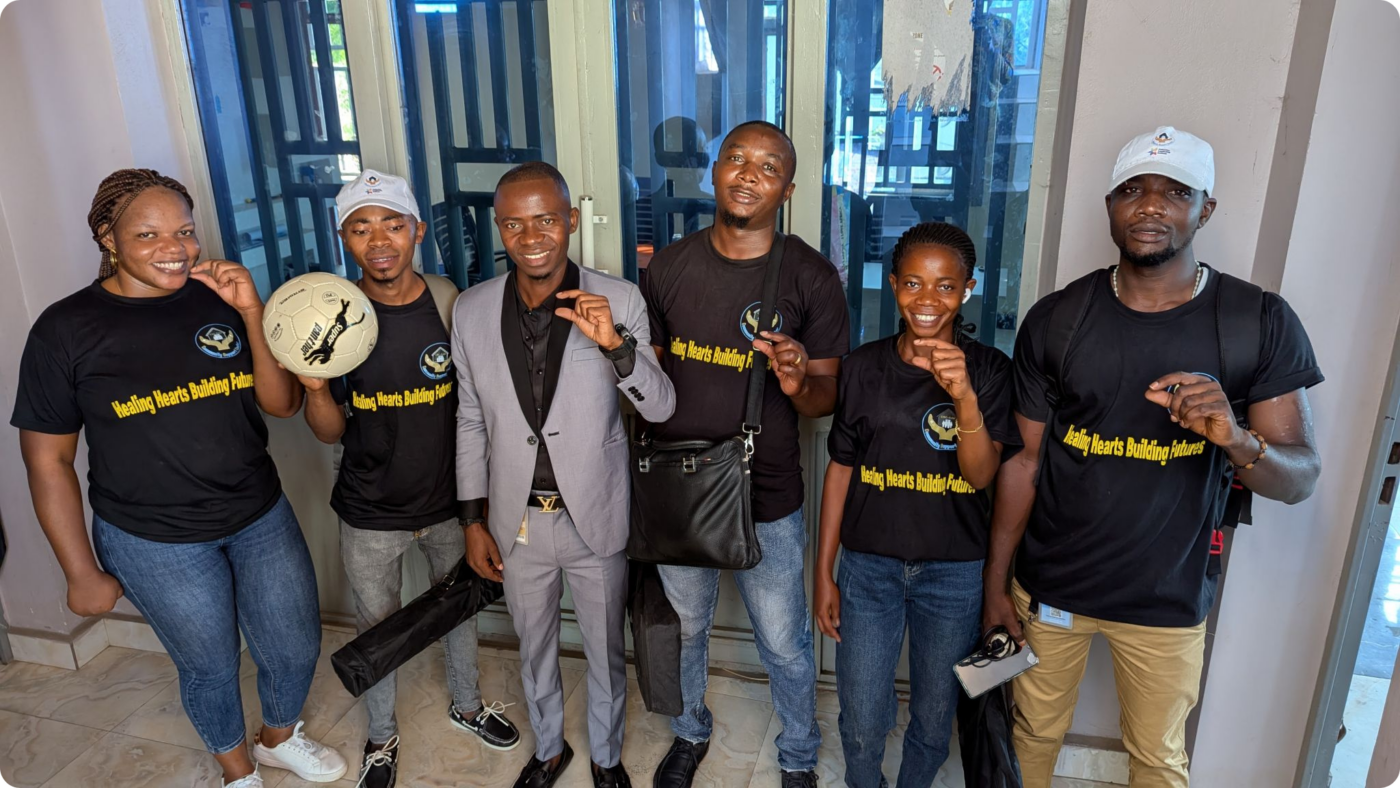
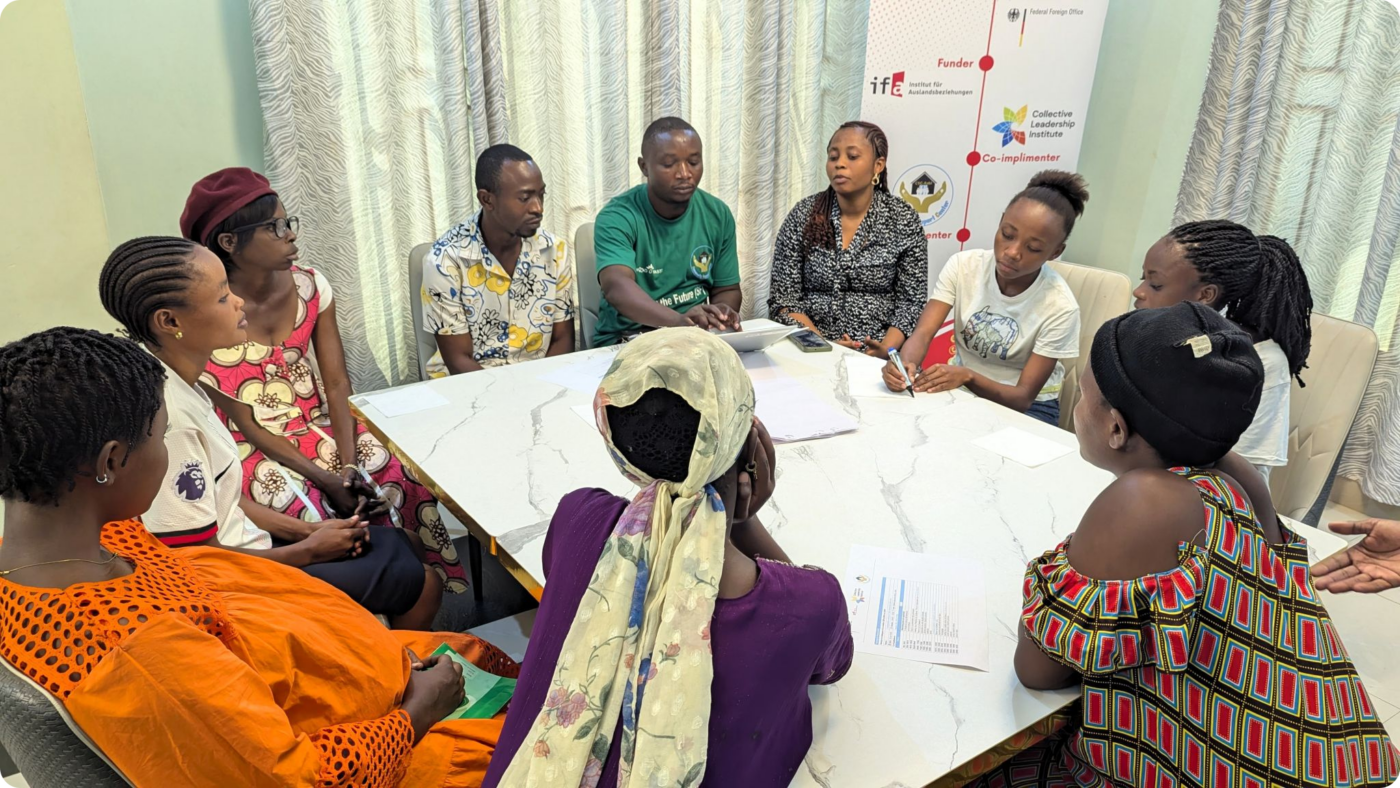
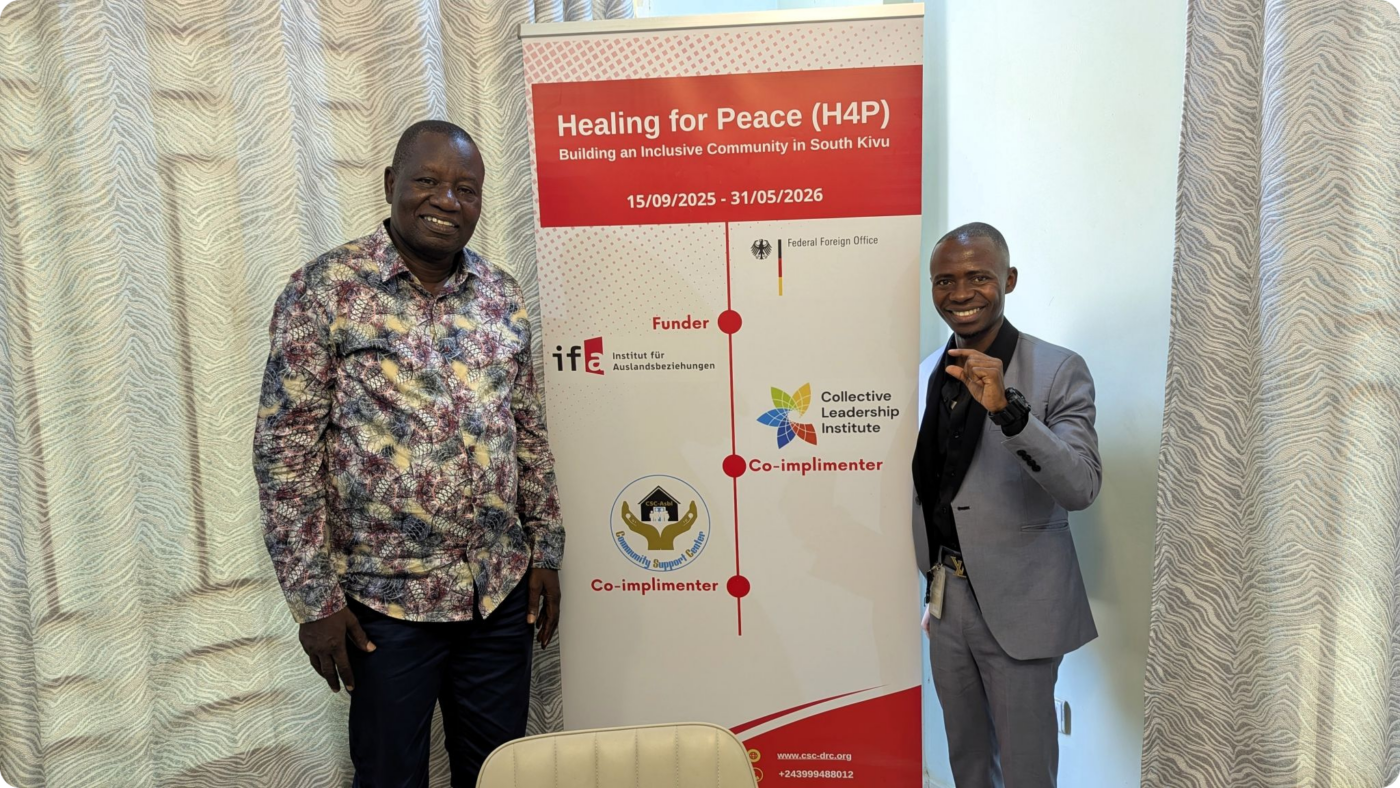
In October 2025, the Community Support Center – Asbl core team met with CLI project managers Guillem Vallbona and Cholpon Aitakhunova in a hybrid setting. Progress in engaging displaced young women and girls, as well as civil society groups for this project was discussed. Collective leadership capacity was also strengthened among the core team.
The engagement process was initially met with some scepticism. Once participants recognised the potential of the collective Healing 4 Peace approach, engagement and commitment grew.
Unfortunately, these positive first steps were followed by setbacks: In December 2025, rebel groups occupied Uvira in South Kivu, bringing project activities to a standstill. Our partners from Community Support Center – Asbl and the Internally Displaced persons engaged in the project were in danger. In addition, internet connectivity was limited and the funds for the project were inaccessible. Uncertainty persisted, as we did not know if people were safe and weather the project could continue. However, both the Community Support Center – Asbl and their local partners adapted quickly to the situation and found alternative solutions. While confronted with these difficult circumstances, Internally Displaced Persons and civil society actors re-asserted their commitment towards the project. In Germany, the project received unwavering support from ifa and the German Federal Foreign Office facilitating significant operational flexibility. We successfully navigated these challenging times together!
In February 2026, the context changed again when the government regained control over Uvira. The relationships and processes established before the occupation, helped to move forward with next project steps. This included a four day-intense hybrid training on integrating the Collective Leadership Compass into peacebuilding efforts. This work laid the foundation for: trauma-informed dialogue, spaces of collective healing in Uvira, rebuilding trust and social cohesion, fluency in applying the Collective Leadership Compass among core group members.
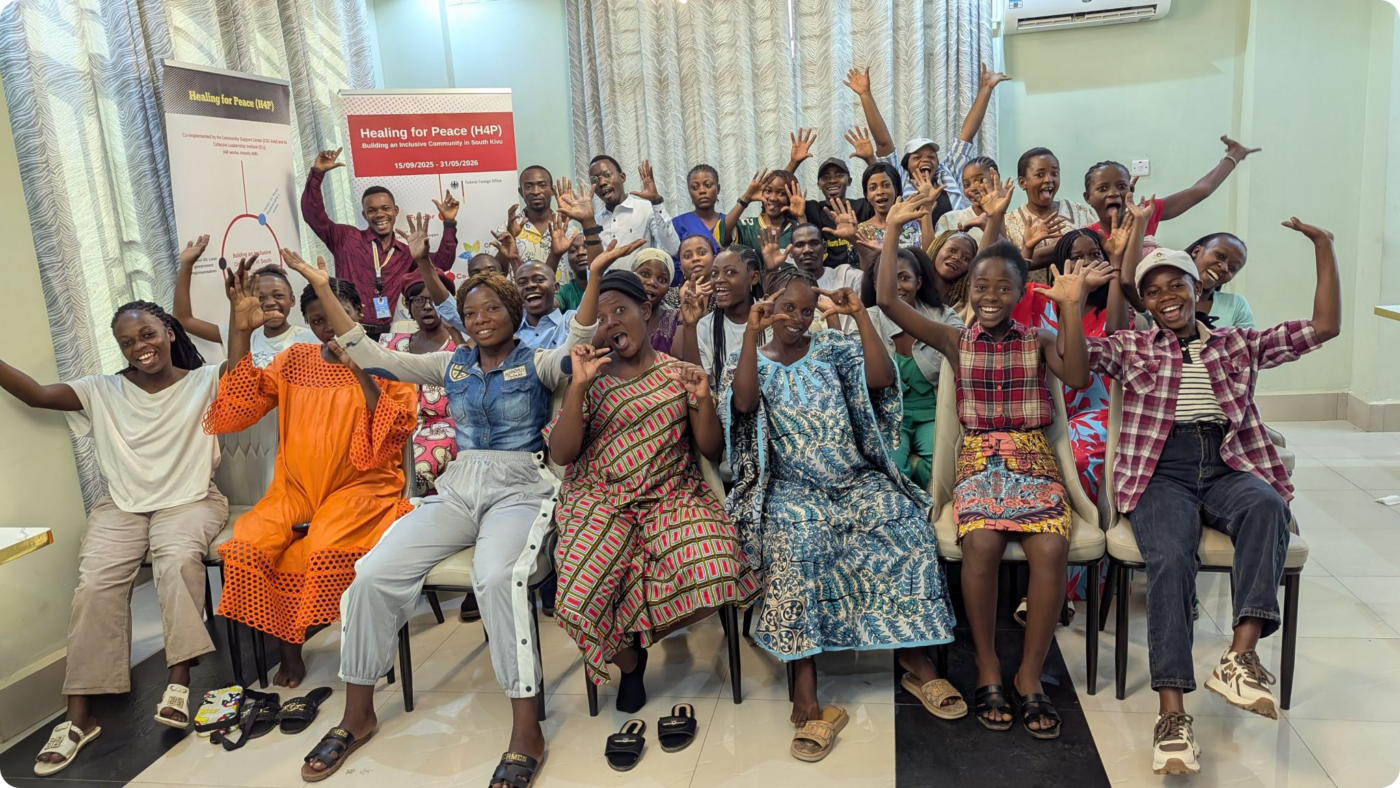
At the end of June 2026, it was time to go public! Women and NGOs participating in the process of trauma healing and community engagement gathered for the Healing for Peace conference. The event was organised and facilitated by CLI’s partner Community Support Center – Asbl: This statement from the team summarizes the conference goals: “When young women are given safe spaces to recover from trauma, build trust, and strengthen their leadership, they become powerful agents of change within their communities. Through H4P, internally displaced young women are not only healing from the impacts of conflict—they are helping to build a more peaceful, inclusive, and resilient Eastern DRC.” But who would recognize these achievements after all? And how sustainable could this project be in a country and region that is facing huge and lasting conflicts? High-level support is an important aspect when working in such a complex setting with the Dialogic Change Model. The CSC-Asbl-team achieved getting recognized by the local authorities. And more than that: the Deputy Mayor of Uvira, Mr. Kifara Kapenda Kiky, came to the conference and gave an opening speech. He recognized the significance of the project’s work, saying: “Even a small drummer, regardless of their size, can make the elders dance.” How the team literally made people dance, you see in this video.
The conference shared highlights of what has been achieved within the last ten months:
- 24 internally displaced young women actively participated in the project,
- 5 civil society organizations came together and engaged throughout the process,
- 6 multi-actor dialogue sessions brought youth representatives and local government together,
- the Community Initiative for Healing and Social Cohesion for Peace was jointly refined and endorsed.
But the conference did not stop there. The internally displaced young women, civil society organizations, youth representatives, and government representatives jointly developed a shared roadmap with the Dialogic Change Model and the Collective Leadership Compass to continue this collaboration beyond the project.