MENA

Project context
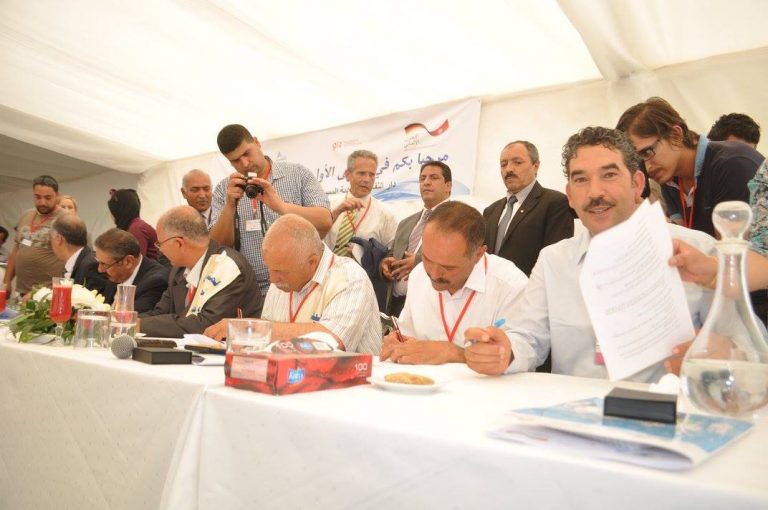
The Tunisian Ministry of Agriculture inaugurated the first Nebhana Water Forum in Sbikha, Governorate of Kairouan, in 2016. In the framework of the GIZ project Appui à la Gestion Intégrée des Ressources en Eau (AGIRE) and with the support of CLI, the Tunisian administration and local water users – mainly farmers – worked together in a participatory dialogue process in order to find solutions for sustainable water management. As a first step, a joint Charter was signed among the stakeholders, outlining the grounding principles of a shared approach to the management of the local water resources. Concrete measures for improved water management, developed by both parties, were equally presented.
Severe overexploitation of the existing resources has been acutely threatening the local water supply and the regional economy, as almost 80% of the water used for agriculture, the major economic sector in the region of Sbikha. Before the Charter was signed, dialogue process of over a year led up to this first Forum and shifted mentalities significantly. The awareness of water resources as a shared responsibility and the recognition of the need to develop and implement solutions in a collaborative way are now firmly established among the stakeholders. A water user stated that ‘we thought the water was always available – with this dialogue we have come to understand that the water supply is in danger, and that we need to talk to each other to find solutions.’
These first results of the dialogue process represented an unprecedented level of local governance in Tunisia, showing, against all odds, a groundbreaking re-establishment of trust between administration and citizens.
